Q&A: Detective Chief Inspector Ben Lavender reflects on family liaison models with Detective Sergeant Sharon Gillespie
Bridging borders in family liaison
Published on
Written by Ben Lavender, Detective Chief Inspector, Avon and Somerset Constabulary
Going equipped
9 mins read

Detective Chief Inspector (DCI) Ben Lavender of Avon and Somerset Constabulary played a pivotal role in leading British policing’s family liaison response following the Air India plane crash.
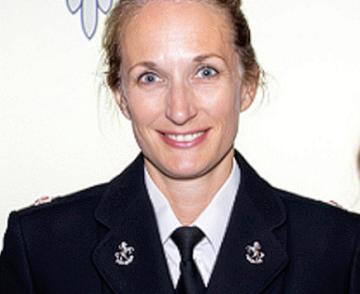
He sits down with Detective Sergeant Sharon Gillespie, Lead Family Liaison Coordinator (FLC) for Police Scotland, to explore the distinctive structure and deployment of family liaison officers north of the border.
They discuss the similarities and differences between the Scotland and the England and Wales models, and how each approach supports bereaved families during some of the most challenging moments of their lives.
Role of family liaison officers
What is a family liaison officer?
Detective Sergeant Sharon Gillespie (SG): A family liaison officer (FLO) is a specially trained police officer who acts as a vital link between the police and the family of a victim during major incidents, such as murder investigations, fatal accidents or terrorist attacks.
Their main role is that of an investigator. They deliver sensitive information, provide emotional support and help families understand police procedures, while also gathering information to assist the investigation.
FLOs are often deployed in cases involving sudden or traumatic deaths, missing persons or disasters, ensuring that families are treated with compassion and dignity throughout the process.
What is the balance between investigative and support roles for FLOs in Scotland?
SG: FLOs are investigators first. We are there to gather victimology and family information. We do refer families to support services, like Scottish Families Bereaved by Crime (SFBC), who can stay with the family throughout the process. While we do go above and beyond, our primary role is investigative.
How did you get into this type of role in Police Scotland?
SG: In my 24 years of service, I have gained experience in local policing, the criminal investigation department (CID) and public protection, before moving to major crime and joining the major investigations team (MIT). This is where I trained as an FLO, which is the role I have enjoyed the most.
After over eight years of working on mainly homicide cases, I progressed to a temporary sergeant role within homicide governance and review working on cold cases. After promotion, I was posted to my current role as the national FLO coordinator within the major crime support unit (MISCU). I sit alongside national disaster victim identification (DVI) and Home Office large major enquiry system (HOLMES) coordinators.
Structure and deployment of FLOs
What are the main structural differences in how FLOs operate in Scotland compared to England and Wales?
SG: The actual role of an FLO is very similar across the UK, but Scotland has some important differences. One of the biggest is that we do not have a coronial process. Instead, we have the Lord Advocate, who heads the Crown Office and Procurator Fiscal Service (COPFS). Within COPFS, the Scottish Fatalities Investigation Unit (SFIU) handles all deaths.
When a death is declared as a homicide or suspicious, we hold a forensic strategy meeting involving the senior investigating officer (SIO), procurator fiscal, pathologist, forensic scientists and crime scene managers. Scotland is divided into four MITs, which handle serious cases such as category A and B homicides, child homicides, mass fatality incidents and complex criminal cases.
How are FLOs structured and deployed in Scotland?
SG: There are about 380 FLOs across Scotland. That sounds like a lot, but when you consider shifts, time off and geography, it can still be difficult on occasion to find someone available. The SIO will decide if FLOs will be deployed and will consult with one of the 77 FLCs before deployment.
We also have 22 road policing FLOs, who we try to pair with crime FLOs when needed. We have a counter terrorism department in Scotland, with one trained counter terrorism FLO. However, several other FLCs and FLOs are trained through an additional counter terrorism course and can be deployed nationally.
FLCs manage the FLO cadre through SharePoint and SCoPE IT systems. If an FLC is unavailable, an FLC from a neighbouring division can assist, as can I, at a national level. I also maintain a national text alert system, which is used to identify available FLOs across Scotland.
Do FLOs in Scotland stay with families through the court process, like in England and Wales?
SG: No, and that’s a major difference. In Scotland, FLOs usually conclude their deployment after the accused has appeared in court and the funeral has taken place. At that point, we complete a handover process with victim information and advice (VIA), which is part of COPFS. VIA provides a dedicated service to families throughout the court process.
FLOs may only be with a family for six to eight weeks. As FLOs are deployed for short periods of time, there is less impact on them, and it is easier to get them released from their day job to deploy to a family. However, there are exceptions to the length of deployment. Examples include assisting with cross-border enquiries or, during a no-body murder enquiry I worked on, assisting a family through a search for a possible disposition site.
At a certain stage during the initial part of an enquiry, families are informed that VIA will take over responsibility for contact. Families can feel an attachment to their FLOs, so it can be difficult to transfer care. SIOs in Police Scotland have a good relationship with the VIA officers, so this process does work well. We hold a handover meeting with the FLO, VIA officer, SIO, case preparer and sometimes the procurator fiscal. The FLO shares details of family dynamics and any concerns with the dedicated VIA worker taking over.
What would happen if new investigative information arises after the handover?
SG: Updates usually go through the VIA. After the initial meeting, it is generally phone contact, which is a less personal service than an FLO provides. If required, the SIO will contact the family directly. FLOs are not typically involved in viewing evidence before a trial, which is arranged by the VIA and the procurator fiscal.
In England and Wales, good practice is that FLOs are deployed in pairs. Is that the same in Scotland?
SG: Yes, in Scotland it is recommended that FLOs are deployed in pairs, along with an FLC. Occasionally, an FLO is deployed alone, usually in remote areas. In these cases, they would be supported by an experienced detective.
How does Scotland’s single-force structure affect FLO deployments?
SG: It is a challenge. The geography of Scotland means that FLOs sometimes travel long distances and need to stay overnight. One example was during a major incident on the Isle of Skye, which occurred during the holiday season. FLOs had to be temporarily accommodated in a community hall on camp beds, until suitable accommodation was made available.
We used to be eight different forces, which changed to one force in 2013. Although everyone completed the same training, there were differences in paperwork and processes. Generally, we all now follow the same procedures. I record – and have oversight of – all deployments, so if there are any anomalies, they can be addressed.
Are FLOs deployed only for homicides in Scotland, or are they deployed to other crime types, such as road traffic accidents, like in England and Wales?
SG: We’re mostly deployed only for homicides. We do also deploy for culpable homicide (similar to manslaughter), suspicious deaths, missing persons with criminality, fatal accident inquiries and incidents of public concern. We have deployed FLOs for cases including a tugboat capsize in the River Clyde, and an industrial fire and explosion in Edinburgh.
In 2024, Police Scotland had 62 FLO deployments, with 42 deployments between January and October 2025. Not every road traffic death requires an FLO. Specific criteria include the investigative need, whether there were child fatalities and section 1 of the Road Traffic Act 1998, death by dangerous driving.
What welfare and support is available for FLOs?
SG: We recognise it can be a stressful, demanding job. We have a national FLC SharePoint site, where all FLOs and deployments are recorded, including the numbers and type of deployment. It can also show any challenges encountered during deployments, allowing divisional FLCs to monitor and offer assistance.
We offer peer-to-peer support, trauma risk management (TRiM) and annual welfare assessments through the employee assistance programme, which I encourage FLOs to use, in addition to the Police Treatment Centre. FLOs can be temporarily removed from the deployment list where necessary and a national text alert system is used to identify available resource quickly across Scotland.
Police Scotland also runs a two-day annual wellbeing conference, which highlights other available support and wellbeing services.
Are there any recent innovations in FLO work?
SG: We are trialling e-FLO logs and using artificial intelligence tools to scan and search decades of cold-case documents. For one of our cold cases, we are digitising historic FLO logs, as well as all other analogue files. This will protect the integrity of a protracted inquiry from the threat of physical degradation of material.
In addition, it allows us to harness new analytical technologies to allow for searching across historic datasets. It’s a huge improvement for long-running investigations.
We are also aligning our detective training more closely with the professionalising investigations programme (PIP) standards, through our investigative training and development unit (ITDU).
Training and selection
What training is required and what does the selection process look like?
SG: FLOs in Police Scotland are trained to a national standard through a one-week course. Selection is on application after completion of the Scottish Qualification Authority (SQA) investigators programme, followed by an interview where the required skills are tested.
Road policing officers can apply after completion of their road policing diploma and core courses.
I also train FLOs in the British Transport Police (BTP) and the Police Investigations and Review Commission, which is Scotland’s inspectorate for police complaints. All FLOs receive the same training.
FLCs complete a three-day course. We follow similar procedures as the rest of the UK when deploying FLOs. However, some of the paperwork is different from the National Police Chiefs’ Council (NPCC), because of incorporating legislative and procedural differences.
All courses are supported by the National Crime Agency’s national FLO adviser.
How is consistency maintained across Scotland?
SG: We have quarterly meetings with FLC portfolio holders, BTP and procurator fiscal representatives, to discuss national updates and organisational learning.
Police Scotland hold a national FLO conference, and I sit on the national executive board for FLOs and counter terrorism FLOs. We also attend conferences across the UK and host continuing professional development days to share best practice.
What kind of person makes a good FLO?
SG: Honesty and patience are essential. You are with people at the worst time of their lives. You need to listen, communicate clearly and be emotionally resilient. Families are often in shock and have a thirst for information, often forgetting procedures while clinging to small details.
Being an FLO can be incredibly demanding, and it’s not for everyone, but it is such a rewarding role.
Contact your FLO liaison in force to find out more about your local service.